Velositol® is an ingredient increasingly found in protein powders, sports nutrition formulas, and select muscle-support products. Despite its growing presence on ingredient labels, Velositol is not a protein, an amino acid, or a new form of creatine.
Velositol is a patented amylopectin-chromium ingredient studied for use alongside protein and its short-term effects on muscle protein production.
What Is Velositol?
Velositol combines amylopectin with two forms of chromium:
- Chromium histidinate
- Chromium picolinate
Amylopectin is a branched-chain carbohydrate. Trivalent chromium is the form of chromium used in foods and dietary supplements. According to the National Institutes of Health (NIH), chromium may play a role in carbohydrate, fat, and protein metabolism through its influence on insulin activity, though the exact mechanism is not fully established.
Velositol does not provide the amino acids that muscles need. Those amino acids still come from foods, whey protein, or plant protein. Velositol is used as an add-on to protein, not as a protein source itself.
How Are Velositol and MyoVera Related?
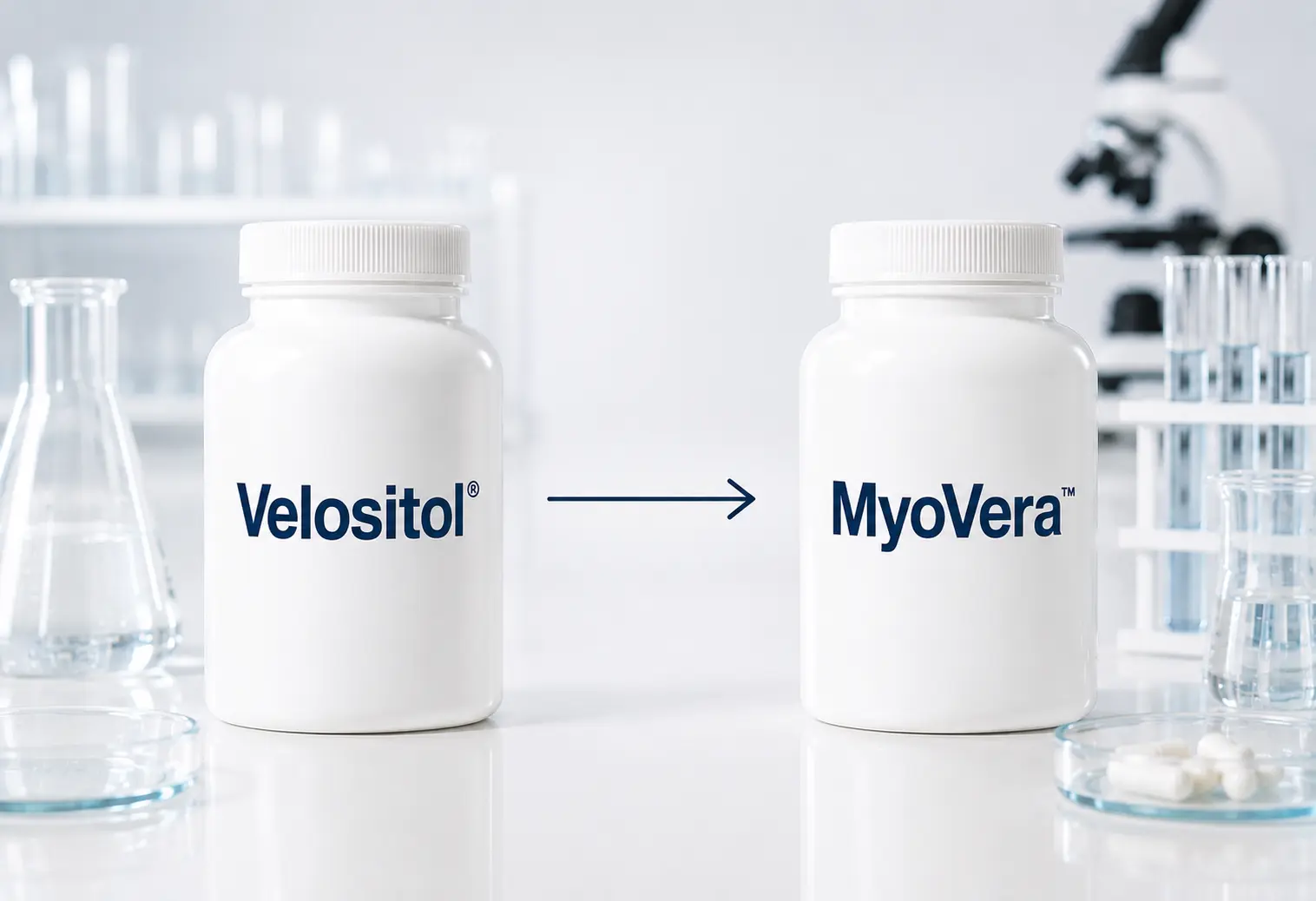
Everwell Health now markets this ingredient under the brand name MyoVera™, a patented ingredient containing two forms of chromium, positioned to support protein utilization, muscle strength, and physical performance.
What Does Velositol Do?
Most research on Velositol has examined its use alongside protein.
Researchers are still studying exactly how Velositol may work. Chromium may affect some processes related to insulin, while amylopectin provides a small amount of carbohydrate. However, the mechanism has not been fully established in humans.
Velositol does not build muscle on its own. Protein still supplies the amino acids needed to produce new muscle protein.
Research on Muscle Protein Synthesis
A 2017 randomized, double-blind, crossover study involving 10 participants compared:
- 6 grams of whey protein
- 6 grams of whey protein plus 2 grams of the amylopectin-chromium complex
Researchers measured a greater short-term muscle protein synthesis response when the complex was taken with whey than when whey was taken alone.
This finding is often condensed into the claim that Velositol “doubles muscle protein synthesis.” That framing needs context:
- The study included only 10 participants
- It measured only the short-term response after a single dose
- The whey dose used (6 grams) is a relatively low protein serving
- The study did not measure long-term muscle gain over months
As a result, this data does not demonstrate that using Velositol will double a person's muscle mass.
Eight-Week Resistance Training Research
A separate study followed 35 physically active men through eight weeks of resistance training. Participants were divided into three groups:
- 2 grams of the amylopectin-chromium complex plus 15 grams of whey
- 15 grams of whey
- 30 grams of whey
The group taking the complex with 15 grams of whey completed more squat repetitions before stopping and improved on some vertical-jump measures. However, the researchers did not find a clear advantage in lean body mass or muscle size compared with the whey-only groups.
What Do These Results Mean?
The findings suggest that Velositol may be most relevant as an ingredient used with protein during a resistance-training routine. However, current research has not shown that it produces greater muscle growth.
Does Velositol Replace Protein?
No.
Both key human studies used the amylopectin-chromium complex alongside whey protein. Velositol has not been shown to replace a complete protein source.
Conclusion
Velositol is an amylopectin-chromium complex studied for use alongside protein. Early studies suggest that Velositol may affect short-term muscle protein production and certain exercise measures when used with whey protein. More research is needed to understand how meaningful these effects are over time.
However, current evidence does not demonstrate that Velositol replaces protein or doubles muscle gain.
Sources and references
- 2017 randomized, double-blind crossover study of an amylopectin-chromium complex with whey protein
- Eight-week resistance-training study of an amylopectin-chromium complex with whey protein
- National Institutes of Health — Chromium information
- Everwell Health — MyoVera ingredient information