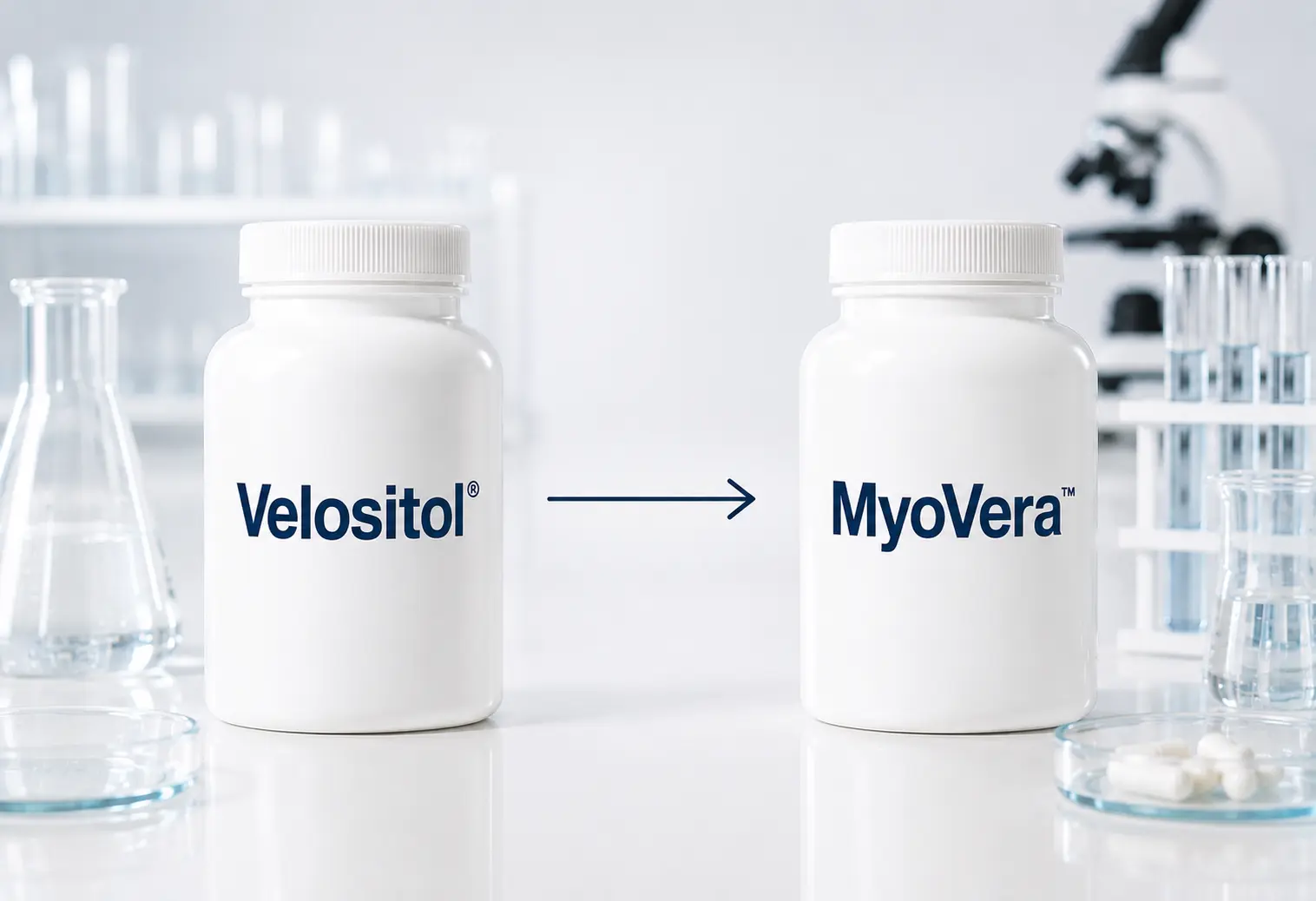
If you have recently searched for Velositol® and started seeing the name MyoVera™ instead, the change can be confusing.
Is MyoVera a different ingredient? Does research published under the Velositol name still matter? And what does it mean if a supplement label still says Velositol?
MyoVera is the newer branding for the muscle-and-strength ingredient previously associated with the Velositol name. Nutrition21 introduced the new MyoVera branding in 2025 as part of updated positioning for the ingredient.[1]
Why Did Velositol Become MyoVera?
In October 2025, Nutrition21 announced new MyoVera branding for its muscle-and-strength ingredient.
The company described the change as updated messaging and positioning intended to present the ingredient more broadly around muscle health, rather than limiting its relevance to traditional sports-nutrition users.[1]
Current Everwell Health materials now feature MyoVera as a patented ingredient based on amylopectin and two forms of chromium.[2]
Is MyoVera a Completely Different Ingredient?
The name change should not be interpreted as the introduction of an entirely separate research history.
Research conducted before the rebranding remains published under the Velositol name. Changing the brand or trademark used to market an ingredient does not change the participants, dose, study design, measurements, or results of research that has already been completed.
This is especially important when looking for scientific evidence. Searching only for “MyoVera” may not surface studies published under the earlier Velositol name.
Current MyoVera materials describe the ingredient as a patented combination of amylopectin with chromium histidinate and chromium picolinate.[2]
Does Velositol Research Still Matter?
Yes, when the goal is to understand the research history behind the ingredient.
The human studies discussed elsewhere on Velositol.co were conducted before the MyoVera branding was introduced and therefore use the Velositol name or describe the studied material as an amylopectin-chromium complex.
For example, the research reviewed in our dosage guide used 2 grams of the amylopectin-chromium complex alongside whey protein.
A branding change does not retroactively rename those published studies. As a result, people researching the ingredient may need to search both Velositol and MyoVera.
Does a Velositol Label Mean a Product Is Outdated?
Not necessarily.
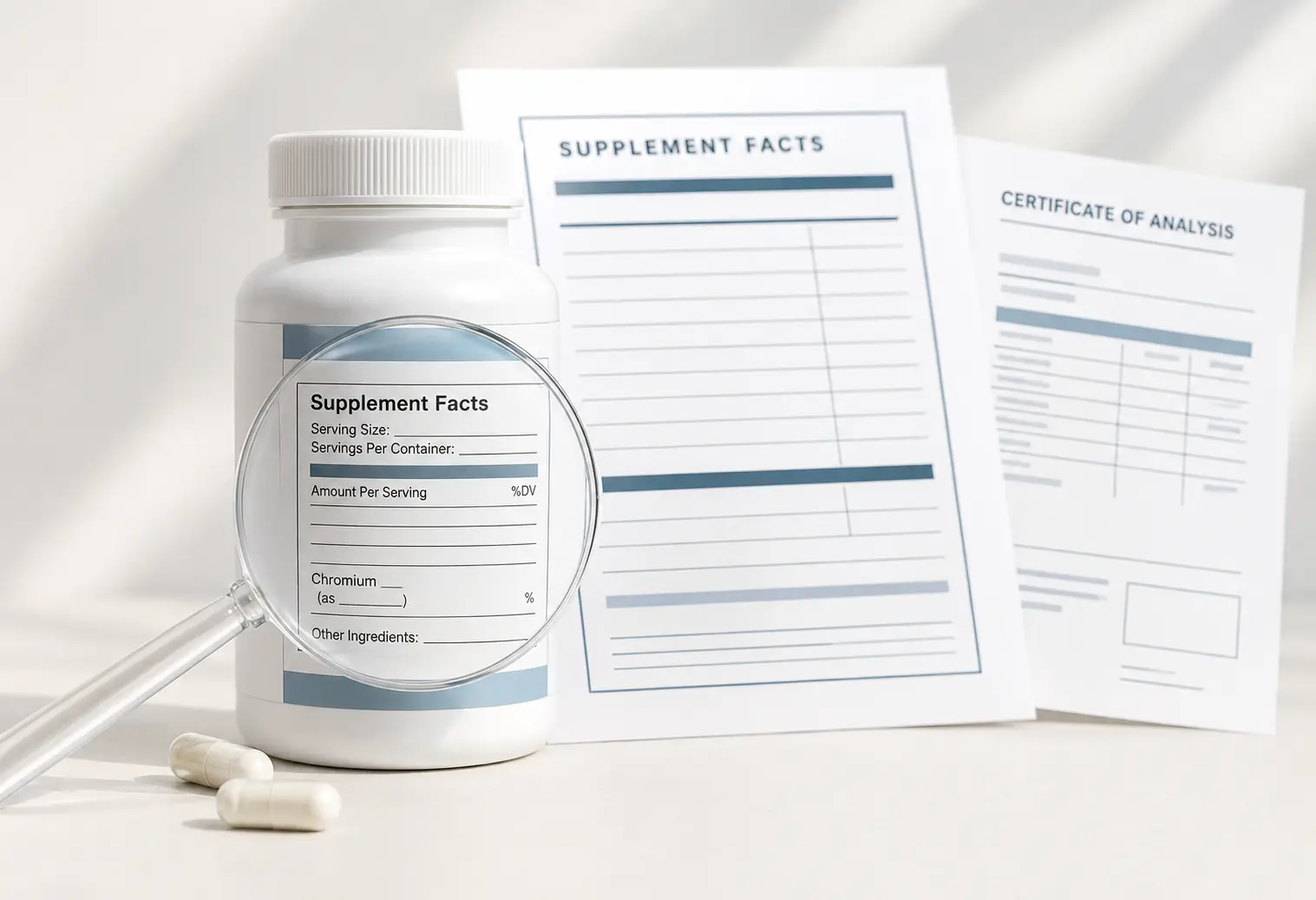
The ingredient name printed on the front of a supplement package is only one piece of information. A Velositol label by itself does not tell you when the product was manufactured, whether the ingredient is authentic, or whether the product meets current quality standards.
Rather than judging a product only by whether the front label says Velositol or MyoVera, look at the full Supplement Facts panel and supporting product information.
What Should You Look for on the Label?
A few details are more useful than the trademark alone.
Branded Ingredient Identity
Look for clear identification of Velositol® or MyoVera™ rather than assuming that any combination of amylopectin and chromium is equivalent to the branded ingredient.
The published Velositol research examined a specific amylopectin-chromium ingredient. Results from those studies should not automatically be applied to every generic formula containing similar ingredients.
Amount Per Serving
Check how much of the ingredient is provided in one complete serving rather than looking only at the amount per capsule or scoop.
The human studies discussed on Velositol.co used 2 grams of the amylopectin-chromium complex, although that does not establish 2 grams as the ideal amount for every person or every use.
For a more detailed discussion of the research dose, see How Much Velositol Should I Take? Dosage and Safety of Velositol.
Chromium Disclosure
Velositol and current MyoVera materials identify chromium as part of the ingredient.
Check the Supplement Facts panel for the amount of chromium provided per serving, particularly if you already use other supplements containing chromium.
Testing Documentation
Testing information can provide additional context about the finished supplement.
A Certificate of Analysis, or CoA, may include information such as identity, potency, microbial testing, heavy metals, and the production lot tested.
When available, lot-specific documentation is more informative than a general statement such as “lab tested.”
For a more detailed label and testing checklist, see Where Can I Buy Velositol? How to Choose a Velositol and MyoVera Supplement.
Velositol or MyoVera: Which Name Should You Search?
For current ingredient information, MyoVera is becoming the more relevant name.
For scientific literature and older product information, Velositol remains important.
Using both search terms provides a more complete picture:
- Velositol for earlier studies and historical ingredient information
- MyoVera for current branding and newer ingredient materials
The two names therefore should not be treated as completely unrelated topics when researching the ingredient.
Conclusion
The change from Velositol to MyoVera is primarily a branding transition, not a reason to discard research published under the earlier name.
Nutrition21 introduced the MyoVera branding in 2025, while much of the existing research remains indexed under Velositol.[1]
For consumers comparing supplements, the front-label trademark is only one factor. Ingredient identity, amount per serving, chromium disclosure, Supplement Facts information, and available testing documentation provide more useful context for evaluating a product.
When researching the science, searching both Velositol and MyoVera can help avoid missing relevant information.
Sources and references
- Everwell Health / Nutrition21. Nutrition21 Unveils Latest Ingredient Innovations at SupplySide Global 2025. October 22, 2025.
- Everwell Health. MyoVera™ — Official Ingredient Page.