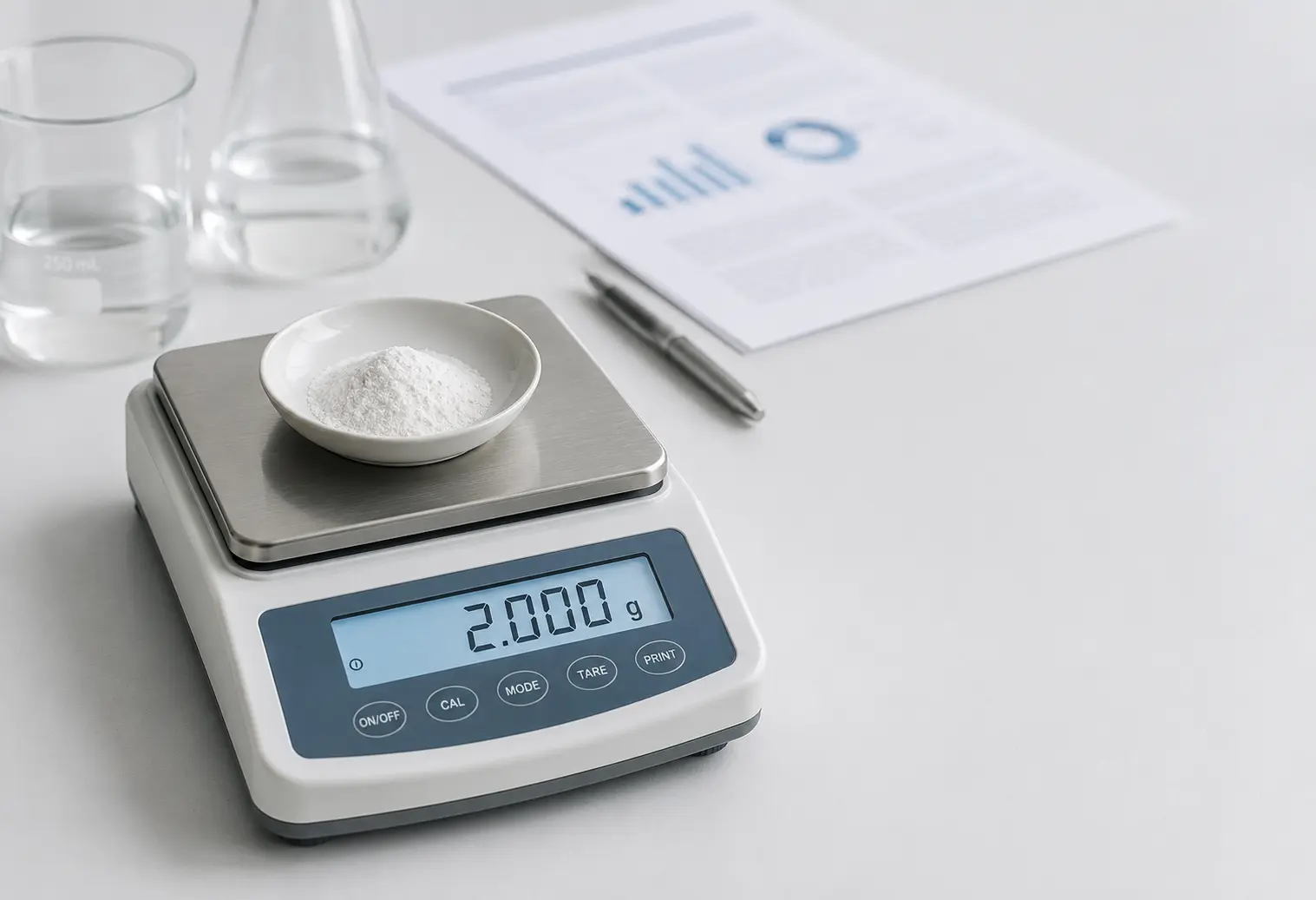
When comparing Velositol® or MyoVera™ supplements, you will often see 2 grams or 2,000 mg discussed.
That can make 2 grams sound like a mandatory threshold, with anything below it automatically considered “underdosed.”
Current research does not support such a simple conclusion.
How Does 2 Grams Appear in the Research?
Beyond the human Velositol studies commonly discussed, newer preclinical research has continued to evaluate the amylopectin-chromium complex, often abbreviated as ACr.
A 2020 study compared BCAAs alone with BCAAs plus ACr in 24 male Wistar rats. Researchers used 0.155 g/kg of ACr and described this as approximately a 2-gram human-equivalent dose.[1]
A separate 2023 study evaluated a pea/rice protein blend with ACr in exercised rats and also used 0.155 g/kg of ACr.[2]
These studies help explain why an amount equivalent to approximately 2 grams continues to appear in discussions around the ingredient.
However, both were animal studies.
They were not designed to determine how much Velositol an individual person should take.
Is a Studied Amount the Same as a Minimum Effective Dose?
No.
Establishing a true minimum effective dose requires a different type of research: a dose-ranging trial.
For example, researchers might directly compare:
- 500 mg
- 1 gram
- 1.5 grams
- 2 grams
- placebo or control
That type of design could help determine where a measurable response begins and whether the response changes as the dose increases.
The studies discussed above were not designed to answer that question.
Are Products Below 2 Grams Automatically “Underdosed”?
Not based on the available evidence.
If a label provides 500 mg or 1 gram of Velositol/ACr, it is fair to say that the amount is below the 2-gram research amount commonly discussed.
That is different from saying research has proven that the lower amount has no biological effect.
A direct human dose-response study would be needed to establish a minimum effective amount.
For that reason, terms such as “ineffective,” “underdosed,” or “minimum clinical dose” should be used carefully.
Why Does Serving Size Matter?
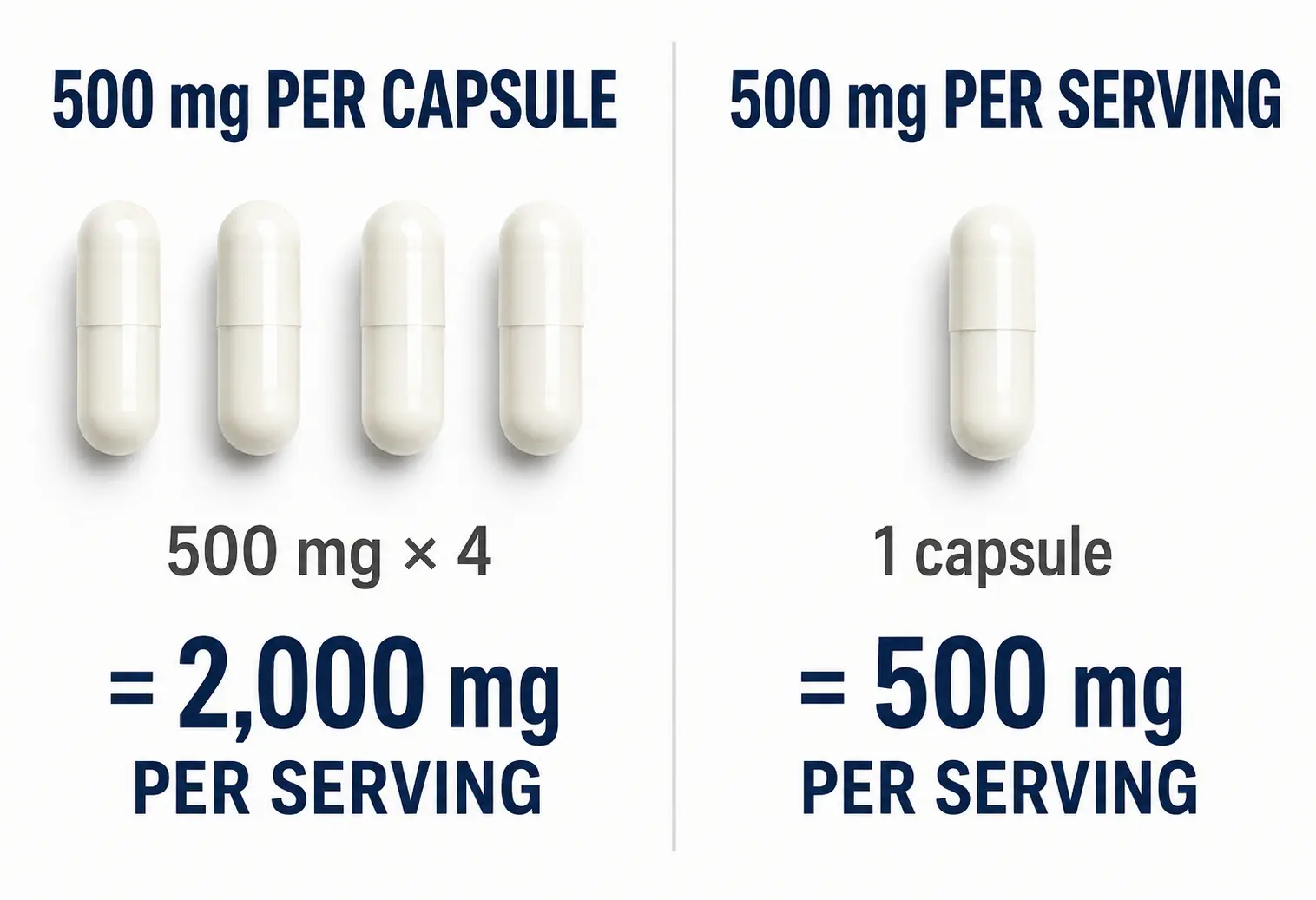
One common mistake when comparing supplements is looking at the large number on the front label without checking the Supplement Facts panel.
For example:
- Product A: 500 mg per capsule, with four capsules per serving.
- Product B: 500 mg per serving, with one capsule per serving.
Both can display “500 mg,” but the actual serving amounts are very different.
When reading a Velositol or MyoVera label, check:
- Is the amount listed per capsule/scoop or per full serving?
- How many capsules or scoops make up one serving?
- How many full servings are in the container?
- Is the Velositol/MyoVera amount individually disclosed?
- Is the chromium amount disclosed?
- Is the ingredient standalone or part of a multi-ingredient blend?
Is a Human-Equivalent Dose a Recommended Human Dose?
No.
Human-equivalent dosing is a method used in animal research to help scale experimental doses between species.
In the 2020 ACr+BCAA study, the researchers described the 0.155 g/kg rat dose as approximately equivalent to 2 grams in human-equivalent terms.[1]
That does not mean the study:
- gave the amount to human participants
- established an optimal human dose
- proved that every user requires exactly 2 grams
Human-equivalent dosing is a research reference, not an individualized recommendation.
What Should You Check When Comparing Velositol or MyoVera Supplements?
Rather than looking only for “2G” on the front label, review the full product information.
Useful comparison points include:
Ingredient identity
Does the label clearly identify Velositol®, MyoVera™, or the branded ingredient rather than a generic amylopectin/chromium combination?
Amount per serving
How much of the branded ingredient is actually provided?
Serving size
How many capsules or scoops are required?
Other ingredients
Is Velositol standalone or combined with protein, creatine, amino acids, or other ingredients?
Testing documentation
Does the company only say “lab tested,” or does it provide an actual Certificate of Analysis, lot information, or third-party testing documentation?
These details provide a more useful comparison than assuming one number determines product quality.
Conclusion
The 2-gram figure matters because it appears repeatedly in Velositol/amylopectin-chromium research.
Newer preclinical studies continue to use an amount scaled to approximately 2 grams, but they are not human dose-ranging trials.
When comparing Velositol or MyoVera supplements, focus on ingredient identity, actual amount per serving, serving size, and testing transparency rather than a front-label number alone.
Sources and references
- Komorowski JR, Perez Ojalvo S, Sylla S, et al. The addition of an amylopectin/chromium complex to branched-chain amino acids enhances muscle protein synthesis in rat skeletal muscle. Journal of the International Society of Sports Nutrition. 2020;17:26. doi:10.1186/s12970-020-00355-8.
- Ozdemir O, Erten F, Er B, et al. Evaluation of pea/rice and amylopectin/chromium as an alternative protein source to improve muscle protein synthesis in rats. European Journal of Nutrition. 2023;62:2293–2302.